Your Ultimate Guide to an Online Solar Panel Simulator in Australia
Are you an Australian homeowner or business owner contemplating the switch to solar energy? The journey to a sustainable future, powered by the sun, is exciting, but let's be honest – it can also feel a bit overwhelming. With so many options for solar panels, battery storage, and system sizes, how do you make the right solar choice for your unique needs? This is where an online solar panel simulator becomes your most valuable tool. Forget the guesswork and endless spreadsheets; imagine a digital platform that allows the user to design, visualise, and estimate the savings of a solar system right from your computer.
In this comprehensive guide, we'll dive deep into the world of the online solar panel simulator, specifically tailored for the Australian context. We’ll explore how these powerful tools can help you understand potential energy production, calculate system prices, and navigate the landscape of solar rebates. Whether you're in Sydney, Melbourne, Brisbane, Perth, Adelaide, or Hobart, a good online solar panel simulator can demystify the process and empower you to make an informed, confident decision. Let's illuminate your path to solar independence!
Why an Online Solar Panel Simulator is a Game-Changer for Australians

Australia, with its abundant sunshine, is a prime location for solar energy. Yet, for many, the initial steps can be daunting. How many solar panels do I need? What will it cost? How much will I save? An online solar panel simulator addresses these critical questions head-on, offering unparalleled value:
- Personalised Insights: Instead of generic estimates, a simulator provides data specific to your roof, location, and energy consumption patterns.
- Cost-Effectiveness: Understand the potential system prices and return on investment (ROI) before you even speak to an installer. This helps you budget effectively and compare options with real figures.
- Optimised Design: Experiment with different pv system sizes, panel placements, and even the inclusion of a solar battery to find the most efficient setup for your home or business.
- Transparency: Gain background information on how various factors – like shading from trees or nearby buildings – impact your energy production.
- Rebate Awareness: Many simulators can factor in current solar rebates and incentives available in Australia, giving you a clearer picture of your actual outlay and savings.
This isn't just about getting a quote; it's about gaining a deep understanding of your potential solar system and its financial and environmental benefits. It's about empowering you to take control of your energy future.
Navigating the Australian Solar Landscape with Confidence
The Australian solar market is dynamic, with specific regulations, incentive programs, and environmental considerations unique to each state and territory. A good online solar panel simulator designed for Australia will take these nuances into account. For instance, the amount of sunlight varies significantly from the tropical north to the cooler southern regions, affecting your energy production. Simulators help you visualise this impact.
Consider the varying wind region classifications across the country, or the specific requirements for grid connection in different network areas. While a consumer-facing simulator might not delve into every technical detail, it provides a foundational design and performance estimate that aligns with local conditions. Tools like SunSPOT (a well-known online solar panel simulator in Australia) are excellent examples of platforms that provide tailored estimates, helping you with help using SunSPOT to understand your specific solar potential.
How Does an Online Solar Panel Simulator Work? A Step-by-Step Guide
The magic of an online solar panel simulator lies in its ability to translate complex data into user-friendly insights. While each platform may have slight variations, the core process generally follows these steps:
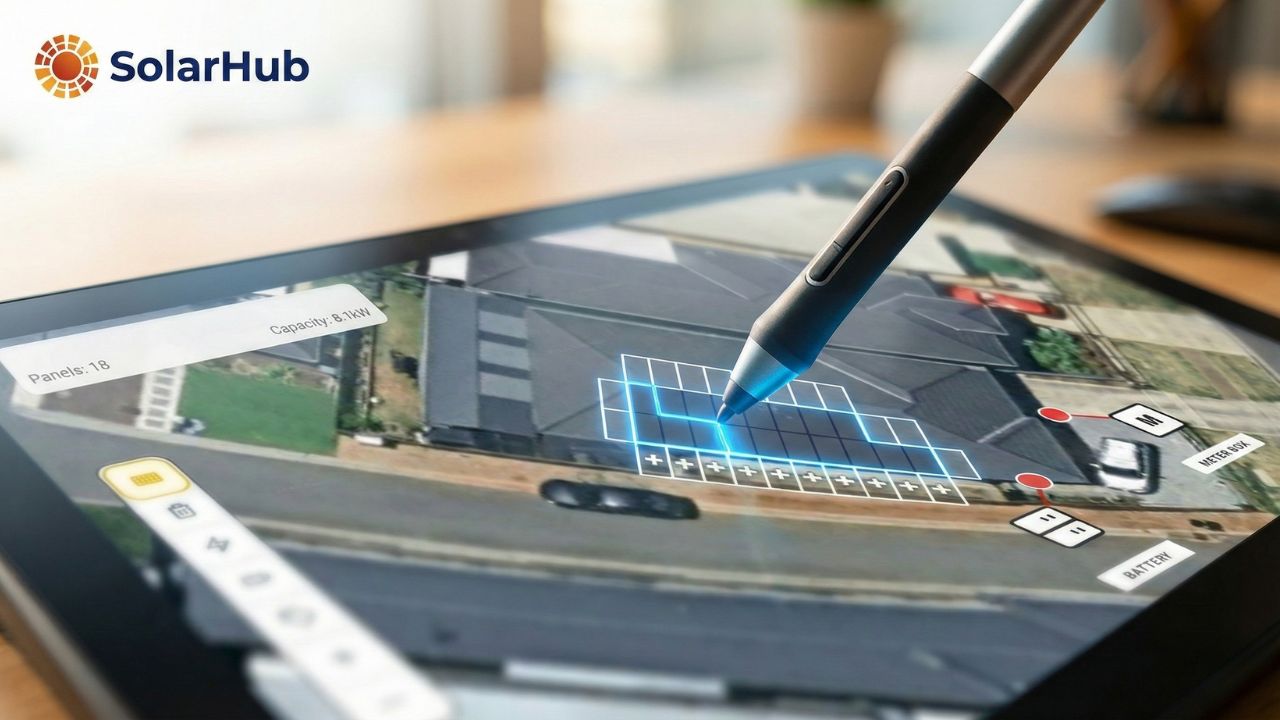
- Enter Your Location: You'll start by inputting your address. The simulator uses this to access satellite imagery of your roof and gather crucial meteorological data for your specific area.
- Map Your Roof: Using an interactive map (often with an arrow icon to guide you), you'll outline your roof area. Some advanced simulators can even automatically detect roof planes. This step helps determine the available area for solar panels and identify potential shading from chimneys, vents, or nearby trees.
- Input Your Energy Usage: Provide your average monthly or annual electricity bill. This data is vital for the simulator to calculate how much of your current energy consumption your new solar system can offset.
- Customise Your System: This is where you become the design engineer! You can often choose different panel types, system size (e.g., a 6kw system, 10kw system), and decide whether to include a solar battery. Some simulators even let you explore options for solar pool heating or pool heating system integration.
- Generate Your Report: With all the data entered, the simulation software crunches the numbers. It then provides a detailed report, often including estimated energy production, potential savings, environmental benefits, and a preliminary cost estimate.
The ease of use and intuitive interface ensures that anyone can benefit, making the initial design and analysis of a pv system accessible to all.
Key Features to Look for in a Top Online Solar Panel Simulator
Not all simulators are created equal. To get the most accurate and useful information, look for these essential features:
- High-Resolution Imagery: Clear satellite image of your roof for precise panel placement and shading analysis.
- Accurate Performance Modelling: The software should use reliable meteorological data and algorithms to estimate energy production, factoring in factors like temperature and sun path.
- Battery Calculator: If you're considering a solar and battery setup, a built-in battery calculator is crucial to determine the optimal storage capacity for your needs.
- Financial Projections: Clear breakdown of system prices, payback period, and long-term savings, including the impact of solar rebates.
- Shading Analysis: A sophisticated online solar panel simulator will illustrate how shading from nearby obstacles affects individual panels and overall system performance throughout the day and year.
- Comparison Tools: Some platforms, like Solar Choice, allow you to compare different pv systems or quotes directly, simplifying your decision-making process.
- User-Friendly Interface: An intuitive design that allows the user to easily navigate and manipulate system components.
Beyond Electricity: Simulating Solar for Pool Heating and More

When most people think of solar energy, they immediately think of electricity production for their homes. However, the sun's power extends far beyond just powering your lights and appliances. An online solar panel simulator can also help you explore the benefits of solar pool heating.
Imagine extending your swimming season in Melbourne or enjoying a warmer pool year-round in Brisbane without the hefty electricity bills. A dedicated solar pool heating system, often using specialised OKU solar collector panels, can significantly reduce your pool heating costs. Some simulators or related tools can help you estimate the size and cost of such a system, considering factors like pool volume, desired temperature, and local sun exposure. You might also consider integrating a heat pump or a filter pump that can be powered by your main solar system, enhancing overall energy application efficiency.
Unpacking the Data: What an Online Solar Panel Simulator Reveals
The true power of an online solar panel simulator lies in the detailed data it provides. This isn't just about pretty pictures; it's about robust research data and projections that empower you to make sound financial and environmental decisions. Here’s what you can expect to uncover:
- Estimated Energy Production: This is often expressed in kilowatt-hours (kWh) per year. It tells you how much electricity your pv system is expected to generate, crucial for understanding your self-sufficiency. You'll see figures like a 6kw solar system producing X amount of energy.
- Financial Savings: A comprehensive analysis of how much money you could save on your electricity bills over the system's lifespan, including the impact of solar rebates and feed-in tariffs.
- Environmental Impact: Many simulators will quantify your reduction in carbon emissions, providing a tangible sense of your contribution to a greener Australia.
- Payback Period: An estimate of how long it will take for your solar system to pay for itself through energy savings.
- Optimised System Sizing: Based on your energy consumption data, the simulator will recommend the ideal system size (e.g., kw system) to meet your needs, ensuring you neither over- nor underspend.
This wealth of information helps you move beyond basic assumptions and engage with installers from a position of knowledge. It's an essential part of effective research data management for your solar project.
Understanding System Prices: From kW to Full Installation
One of the most common questions is, "What are the solar system prices?" An online solar panel simulator provides initial estimates, often expressed as prices kw or prices kw solar system. It’s important to understand that these are estimates, and the final cost will depend on several factors:
- System Size: Larger kw solar system setups naturally cost more upfront.
- Panel Quality: Different brands and types of solar panels have varying efficiencies and price points.
- Inverter Type: String inverters, micro-inverters, and hybrid inverters (for solar battery integration) have different costs.
- Installation Complexity: Factors like roof type, pitch, and ease of access can influence labour costs.
- Solar Battery Inclusion: Adding a solar battery significantly increases the upfront cost but can enhance long-term savings and energy independence.
- Location: Regional variations in labour costs and installer availability can affect system prices.
While an online solar panel simulator gives you a great starting point, always get detailed quotes from reputable installers for precise system prices kw solar system estimates specific to your property.
Advanced Insights: The Role of Simulation Software in Solar Design

While consumer-grade online solar panel simulators are excellent for initial exploration, the professional solar industry relies on highly sophisticated solar simulation software for precise design and performance guarantees. Tools like PVsyst and Helioscope (as often compared by industry experts like GSES) are critical for commercial solar projects and complex residential installations.
These advanced platforms delve into minute details, performing highly accurate shading analysis, factoring in temperature coefficients of panels, and optimising inverter selection. They generate bankable energy production reports, essential for financing and project validation. This level of detail ensures that when installers use a platform like SolarHub (which replaces messy spreadsheets and clunky CRMs with an integrated system), they are working with the best possible background information and design tools to provide accurate proposals.
The precision required for modern pv systems is often supported by extensive research data, sometimes even drawing from materials science research conducted at universities like RMIT. Techniques such as electron microscopy, ion beamimaging, and sample preparation are fundamental to understanding and improving solar panel efficiency and durability. While these are niche areas of research, they underscore the scientific rigour behind the solar energy application that ultimately benefits consumers. Even data management for these complex research projects requires sophisticated software.
The Future of Solar: Integrating Battery Storage and Smart Systems
The conversation around solar energy in Australia increasingly includes solar battery storage. A battery allows you to store excess energy generated during the day and use it at night or during peak demand, further reducing your reliance on the grid and maximising your savings. Many online solar panel simulators now feature a dedicated battery calculator, helping you:
- Determine the optimal battery size for your energy consumption.
- Understand the additional cost and payback period of a solar and batterysystem.
- Visualise how a solar battery can increase your energy independence.
This integration is key to achieving true energy resilience and is a major step forward for pv systems in Australia.
Choosing the Right Path: What to Do After Using an Online Solar Panel Simulator
See Your Solar Savings in Minutes
Begin Now
An online solar panel simulator is a fantastic starting point, but it's just the beginning. Once you have a clear idea of your needs and potential savings, the next steps are crucial:
- Consult with Reputable Installers: Use the data from your simulator to have informed conversations with local installers in Sydney, Perth, Adelaide, or wherever you are. Ask for detailed quotes for your desired pv system.
- Get Multiple Quotes: Don't settle for the first offer. Compare at least three quotes to ensure you're getting competitive system prices and a good deal on solar panels and components. Platforms like Solar Choice can assist with this.
- Site Visit: A professional installer will conduct a thorough site visit to assess your roof, electrical system, and actual shading in person. This ensures the final design is accurate and viable.
- Understand Warranties and Guarantees: Inquire about panel, inverter, and installation warranties to protect your investment.
- Check Credentials: Ensure your chosen installer is Clean Energy Council (CEC) accredited and has a proven track record. This builds trustworthiness and ensures quality work.
For solar retailers and installers across Australia, managing this entire process efficiently is key. That's where SolarHub comes in. Our all-in-one platform streamlines everything from lead management and generating professional solar proposals with accurate calculations, to job scheduling and team management. We help businesses deliver an exceptional customer experience, ensuring every solar system design and installation is handled with precision and care.
Question 1: What is an online solar panel simulator and how does it work?
An online solar panel simulator is a digital tool that helps homeowners and businesses design and estimate a solar system tailored to their property. By entering details like your location, roof layout, and electricity usage, the simulator calculates potential solar production, system size, estimated savings, and even applicable Australian rebates. It offers a clear, data-backed picture of what solar could look like for your home or business—before you speak to an installer.
Question 2: How accurate are the results from an online solar panel simulator?
While simulators provide highly useful estimates based on satellite imagery, weather data, and your inputs, they are intended as a guide rather than a final design. Accuracy can vary depending on shading, roof structure, and other site-specific factors that only a professional installer can assess in person. Still, a good simulator offers a reliable starting point that helps you compare system sizes, costs, and savings with confidence.
Question 3: Can a simulator help me decide whether I need a solar battery?
Yes! Many modern online solar panel simulators include a battery calculator that assesses your energy usage patterns and recommends the ideal battery size. It can show you how much additional savings and energy independence a battery could provide, along with the payback period. This helps you understand whether adding storage is financially worthwhile for your property.
Question 4: What should I do after using an online solar panel simulator?
After generating your report, your next step is to speak with reputable, Clean Energy Council–accredited installers. Use the simulator’s data to request detailed quotes and compare options. A professional site visit will confirm shading, roof condition, and electrical compatibility to finalise your design. From there, you can make an informed decision backed by both simulation data and expert advice.
Conclusion: Your Solar Journey Starts Here
The advent of the online solar panel simulator has truly revolutionised how Australians approach solar energy. It transforms a complex decision into an accessible, engaging, and highly informative process. By offering personalised design, accurate energy production estimates, and clear financial projections, these tools empower you to take the first confident step towards a greener, more cost-effective future.
Whether you're exploring a basic pv system for your home in Perth, a robust commercial solar solution for your business in Brisbane, or even a solar pool heating system in Adelaide, an online solar panel simulator is your essential companion. It provides the crucial background information and data analysis needed to make an informed solar choice.
Ready to turn your solar dreams into reality? While simulators help you plan, SolarHub helps Australian solar retailers and installers bring those plans to life seamlessly. Our all-in-one platform manages everything from lead management to professional solar proposals and job scheduling, ensuring a smooth and efficient journey for every customer.
Discover How SolarHub Empowers Australian Solar Businesses Today!