How to Scale Your Australian Solar Business with the Right Proposal Software
Are you an Australian solar retailer or installer juggling spreadsheets, clunky CRM systems, and separate design tools? In Australia's booming renewable energy market, efficiency isn't just a buzzword – it's the key to scaling your solar business. This comprehensive guide explores why the right solar proposal software in Australia is not just a convenience but a critical investment in your success. We'll show you how an integrated platform can transform your operations, boost sales, and enhance customer satisfaction, making it your ultimate guide to mastering the Australian solar landscape.
From the bustling suburbs of Sydney and Melbourne to the sun-drenched landscapes of Perth, Brisbane, Adelaide, and Hobart, Australian solar businesses face unique challenges and opportunities. The right software solution can help you navigate everything from complex rebates and incentives to diverse customer demands for residential and commercial solar installations. Let's explore how to find the best solar proposal software that fits your specific needs.
Why Investing in Dedicated Solar Proposal Software Australia is a Game-Changer
In a competitive market, generic sales tools don't cut it. Dedicated solar proposal software is purpose-built to address the intricate requirements of the solar industry. A generic quote looks unprofessional. You need a tool that builds trust by showing customers exactly how much they’ll save based on real-time data.
Streamlining Your Solar Sales Process
Imagine reducing the time spent on manual calculations and design iterations. With robust solar proposal software Australia-wide, you can:
- Generate professional proposals in minutes: Gone are the days of spending hours on each quote. Automated calculations for energy savings, payback periods, and system performance mean faster turnaround times.
- Enhance accuracy: Avoid costly errors with precise PV system design and energy production estimates, considering local weather data and shading analysis.
- Improve customer engagement: Interactive proposals with visual layouts, 3D renderings, and clear financial breakdowns help customers understand their investment better.
- Boost your sales conversion rates: Professional, data-rich proposals build trust and confidence, leading to more closed deals and increased solar success.
Beyond Proposals: The Power of an All-in-One Solar Platform
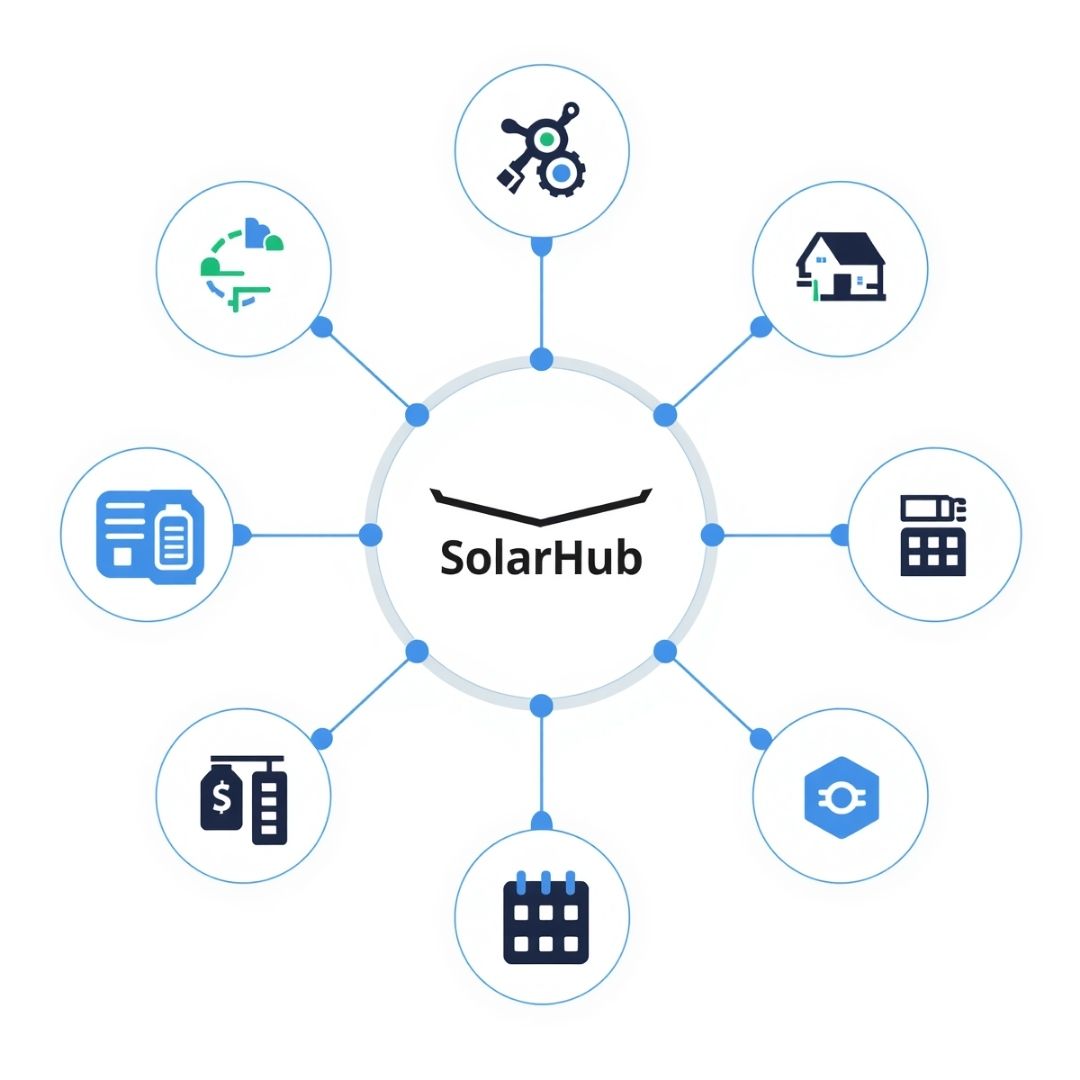
The best solar proposal software Australia offers extends its functionality far beyond just creating quotes. An integrated system, like SolarHub, acts as a central hub for your entire operation, replacing disparate tools with one beautiful, integrated system. This means:
Lead Management: Track and nurture every opportunity from initial contact to conversion. Say goodbye to lost leads and hello to a streamlined pipeline.
Solar Proposals: As discussed, professional quotes with accurate calculations and stunning visuals are at your fingertips.
Email Marketing: Automated campaigns and follow-ups keep your brand top-of-mind, nurturing prospects and engaging existing customers. This is crucial for maintaining relationships and driving repeat business for your solar business.
Smart Integrations: Connect seamlessly with tools you already use, like Facebook, Google Sheets, and landing pages, to automate data flow and reduce manual entry.
Job Scheduling: Calendar sync and appointment booking features simplify managing installations and site visits for your team.
Sales Appointments: Efficiently manage meetings and site visits, ensuring your sales team is always prepared and productive.
Team Management: Define roles, permissions, and foster collaboration across your entire team, whether they're in the office or out in the field. This ensures everyone is on the same page, boosting overall efficiency for your Australian solar business.
Lead Allocation: Smart routing and assignment rules ensure leads go to the right salesperson at the right time, maximising conversion potential.
Key Features to Look for in Solar Proposal Software for Australian Businesses
When evaluating solar proposal software Australia-wide, consider these essential features that cater specifically to the local market and operational needs:
1. Accurate Solar Design & Simulation
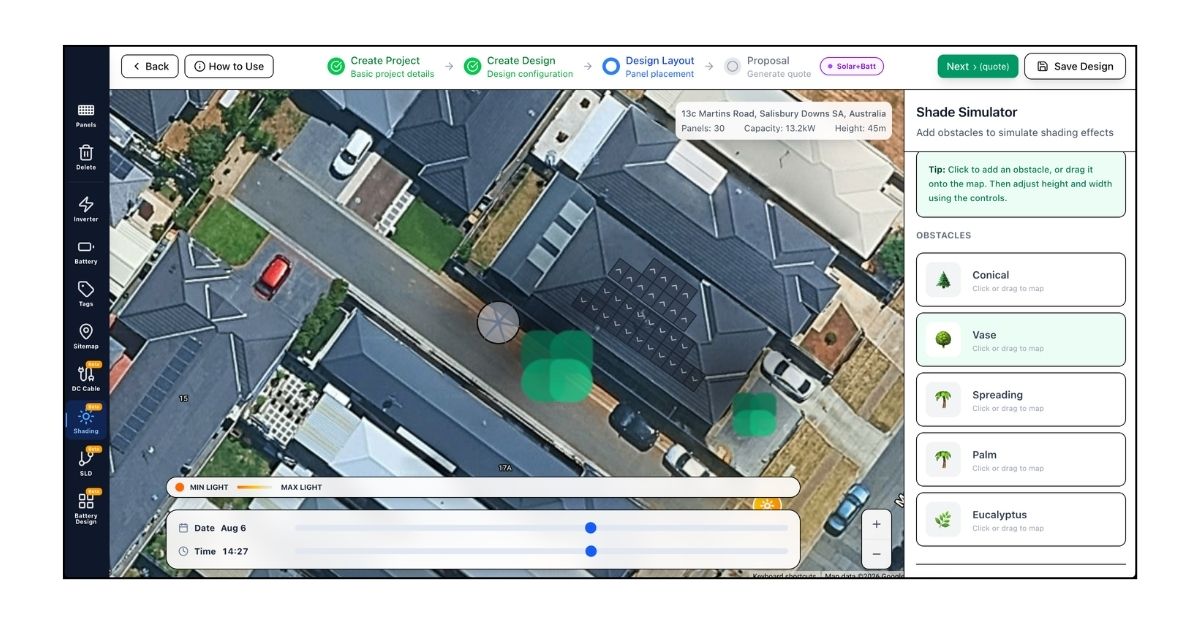 A top-tier solar design software will provide robust tools for PV system design. Look for:
- High-resolution aerial imagery: Crucial for accurate site assessments and panel layout planning, especially in urban areas like Sydney and Melbourne.
- Shading analysis: Precise calculations of shading impacts from surrounding trees or buildings are vital for realistic energy production estimates.
- 3D modelling: Visualise the solar panel system on the customer's roof, making it easier for them to understand the aesthetic and functional aspects of their investment.
- Battery storage integration: With the growing popularity of solar battery systems in Australia, the software should be able to design and simulate these setups effectively.
- Performance simulation: Accurate energy yield predictions based on Australian weather data and system components.
2. Financial Modelling & Rebate Integration
Australian customers are keenly interested in savings and payback. Your software should:
- Calculate ROI and payback periods: Clearly demonstrate the financial benefits of going solar.
- Incorporate STCs and other rebates: Automatically apply current Small-scale Technology Certificates (STCs) and state-specific incentives, like those found in Queensland or South Australia. This is a critical component for any Australian guide to solar sales.
- Flexible financing options: Allow for different payment structures, loans, and lease options to be presented within the proposal.
- Detailed energy savings: Compare current energy bills with projected savings from the new solar system.
3. Professional & Customisable Proposals
Your proposals are a reflection of your brand. Ensure the software allows for:
- Branding and customisation: Add your company logo, colours, and contact details to every proposal.
- Clear, concise language: Present complex information in an easy-to-understand format for the average homeowner or business owner.
- Interactive elements: Some advanced tools offer interactive components that allow customers to explore different system options.
- Digital signature capabilities: Streamline the closing process with e-signatures.
4. CRM & Project Management Capabilities
An integrated solar CRM is invaluable for managing your customer journey:
- Lead tracking: Monitor the status of every lead, from initial enquiry to installation.
- Customer database: Store all customer information, communication history, and project details in one secure place.
- Task management: Assign tasks to your team, set deadlines, and track project progress.
- Reporting and analytics: Gain insights into sales performance, lead conversion rates, and overall business health.
5. Australian Specifics & Compliance
Crucially, the software must understand the Australian context:
- Local regulations: Be aware of specific grid connection rules and compliance requirements across different states and territories.
- Australian product database: Access to a database of CEC-approved solar panels, inverters, and batteries commonly used in Australia.
- Integration with local imagery providers: Access to up-to-date aerial imagery for accurate site assessments across the continent.
Comparing Solar Proposal Software Australia: What Makes SolarHub Stand Out?
While there are several options for solar proposal software Australia offers, discerning businesses look for a solution that truly integrates and simplifies their entire workflow. Many solutions might excel in one area, like solar design software or focus heavily on proposals. However, the real boost for Australian businesses comes from an all-in-one platform.
SolarHub is specifically designed for Australian solar retailers and installers, providing everything you need in one platform. It's not just a proposal generator; it's a complete ecosystem to manage leads, design proposals, and run projects—from a single screen. This means less time switching between applications and more time focusing on what you do best: selling and installing solar systems.
Feature Comparison: Integrated vs. Standalone Solar Tools
| Feature/Aspect | Integrated Platform (e.g., SolarHub) | Standalone Solar Proposal/Design Tool |
|---|---|---|
| Lead Management | Comprehensive tracking, nurturing, and allocation | Often requires manual input or a separate CRM |
| Proposal Generation | Seamless creation with integrated customer data | Focuses solely on proposal output, and data is often manually transferred |
| Solar Design Software | Built-in, accurate design and simulation tools | Core functionality, but not linked to other business processes |
| Email Marketing | Automated campaigns & follow-ups within the platform | Requires integration with third-party email tools |
| Job Scheduling & Project Management | Integrated calendar, task management, and team collaboration | Limited or non-existent, needs separate project management software |
| Reporting & Analytics | Holistic view of sales, marketing, and project performance | Insights limited to proposal/design metrics |
| Data Consistency | Single source of truth, reducing errors | Risk of data discrepancies across multiple systems |
| User Experience | Unified interface, less training, higher efficiency | Multiple interfaces, potential for context switching overhead |
| Cost Efficiency | Often more cost-effective than subscribing to multiple tools | The cumulative cost of several subscriptions can be higher |
Choosing an integrated platform like SolarHub means you're not just getting a tool; you're getting a complete solution for Australian businesses to manage their entire solar sales and installation lifecycle. This holistic approach is what truly allows for solar success in today's market.
Implementing Your Chosen Solar Proposal Software: A Guide for Australian Installers
Once you've selected the best solar proposal software Australia has to offer for your business, successful implementation is key. Here's a general guide:
- Data Migration: Transfer existing customer data, pricing, and product lists into the new system. This can be a significant undertaking but is crucial for a smooth transition.
- Team Training: Ensure your entire team, from sales to design to installation, is proficient in using the new software. Comprehensive training will maximise adoption and efficiency.
- Customisation: Tailor the software to your specific workflows, branding, and proposal templates. This ensures it aligns perfectly with your business operations.
- Integration Setup: Connect with other essential tools like accounting software or marketing platforms to create a seamless operational flow.
- Pilot Project: Start with a small pilot project or a few key team members to iron out any kinks before a full rollout.
- Ongoing Support: Utilise the software provider's support and resources to continuously optimise your usage and address any challenges.
Remember, the goal is to boost efficiency and sales, not to add another layer of complexity. Choose a provider, like SolarHub, that offers excellent support and resources tailored to Australian solar businesses.
The Future of Solar Sales: What's Next for Australian Solar Businesses?

The solar industry in Australia is constantly evolving. As technology advances and customer expectations shift, solar proposal software Australia will need to keep pace. We can expect to see:
- More sophisticated AI and machine learning: For even more accurate shading analysis, energy predictions, and even lead scoring.
- Enhanced virtual reality (VR) and augmented reality (AR) proposals: Allowing customers to 'see' their solar system in their home before installation.
- Deeper integration with smart home systems and VPPs (Virtual Power Plants): As grid integration becomes more complex, software will need to manage these connections.
- Greater focus on commercial solar solutions: As the commercial solar market grows, software will need to offer more robust features for complex C&I projects.
Staying ahead means choosing a platform that is not only powerful today but also future-proof. SolarHub is continuously updated to incorporate the latest industry trends and technological advancements, ensuring your business remains at the forefront of the Australian solar market.
Frequently Asked Questions about Solar Proposal Software Australia
What is solar proposal software, and why do I need it for my Australian solar business?
Solar proposal software Australia refers to specialised tools designed to help solar installers and retailers create professional, accurate, and visually appealing quotes for potential customers. You need it because it streamlines your sales process, automates complex calculations (like energy savings and STC rebates), enhances customer engagement with visual designs, and ultimately boosts your sales conversion rates in the competitive Australian market. It replaces manual, error-prone methods with efficient, integrated solutions.
How does solar design software differ from proposal software?
While often integrated, solar design software primarily focuses on the technical aspects of system layout, energy simulation, and shading analysis (e.g., panel layout, inverter sizing). Proposal software then takes this design data and integrates it with financial calculations, customer information, and branding to create a complete sales document. Many leading platforms, like SolarHub, offer both robust PV system design and proposal generation capabilities within a single, unified interface.
What is solar proposal software, and why do I need it for my Australian solar business?
Solar proposal software Australia refers to specialised tools designed to help solar installers and retailers create professional, accurate, and visually appealing quotes for potential customers. You need it because it streamlines your sales process, automates complex calculations (like energy savings and STC rebates), enhances customer engagement with visual designs, and ultimately boosts your sales conversion rates in the competitive Australian market. It replaces manual, error-prone methods with efficient, integrated solutions.
How does solar design software differ from proposal software?
While often integrated, solar design software primarily focuses on the technical aspects of system layout, energy simulation, and shading analysis (e.g., panel layout, inverter sizing). Proposal software then takes this design data and integrates it with financial calculations, customer information, and branding to create a complete sales document. Many leading platforms, like SolarHub, offer both robust PV system design and proposal generation capabilities within a single, unified interface.
Can these tools handle both residential and commercial solar projects in Australia?
Yes, the best solar proposal software Australia offers, including SolarHub, is designed to cater to both residential and commercial solar projects. For residential, it simplifies standard installations and battery integrations. For commercial, it provides tools for larger, more complex systems, detailed financial analysis for businesses, and often features for multi-site management. Always check that the software you choose has the scalability and features for your specific business focus.
Is there a free solar proposal software option available for Australian installers?
While some platforms might offer limited 'free' tiers or trials, comprehensive, high-quality solar proposal software in Australia typically comes with a subscription fee. These fees cover advanced features like accurate aerial imagery, sophisticated design tools, CRM integration, and ongoing support and updates. The investment in a robust paid solution usually pays for itself many times over through increased efficiency, higher sales, and reduced errors. Be wary of truly free options, as they often lack the depth and reliability needed for professional operations.
Can these tools handle both residential and commercial solar projects in Australia?
Yes, the best solar proposal software Australia offers, including SolarHub, is designed to cater to both residential and commercial solar projects. For residential, it simplifies standard installations and battery integrations. For commercial, it provides tools for larger, more complex systems, detailed financial analysis for businesses, and often features for multi-site management. Always check that the software you choose has the scalability and features for your specific business focus.
Is there a free solar proposal software option available for Australian installers?
While some platforms might offer limited 'free' tiers or trials, comprehensive, high-quality solar proposal software in Australia typically comes with a subscription fee. These fees cover advanced features like accurate aerial imagery, sophisticated design tools, CRM integration, and ongoing support and updates. The investment in a robust paid solution usually pays for itself many times over through increased efficiency, higher sales, and reduced errors. Be wary of truly free options, as they often lack the depth and reliability needed for professional operations.
Ready to Boost Your Australian Solar Business?
Choosing the right solar proposal software Australia offers is a pivotal decision for any solar business looking to thrive. It’s about more than just generating a quote; it’s about empowering your sales team, streamlining your operations, and delivering exceptional customer experiences. By investing in an integrated, comprehensive platform, you’re not just buying software – you’re investing in the future success of your solar business.
Stop wrestling with disconnected tools and start achieving true efficiency and growth. Discover how SolarHub can transform your Australian solar operations, making lead management, solar proposals, email marketing, and project execution seamless and effective.
Ready to revolutionise your solar sales and project management?
Learn More & Get Started with SolarHub Today!