Best Solar CRM for Adelaide Homeowners: How to Choose a Solar Company That Manages Your Job Properly
When Adelaide homeowners talk about choosing a solar installer, the conversation usually focuses on panel brands, inverter warranties, and solar system prices. What gets overlooked is how the solar company actually runs its business — and that directly affects your experience from the first call through to after-sales support.
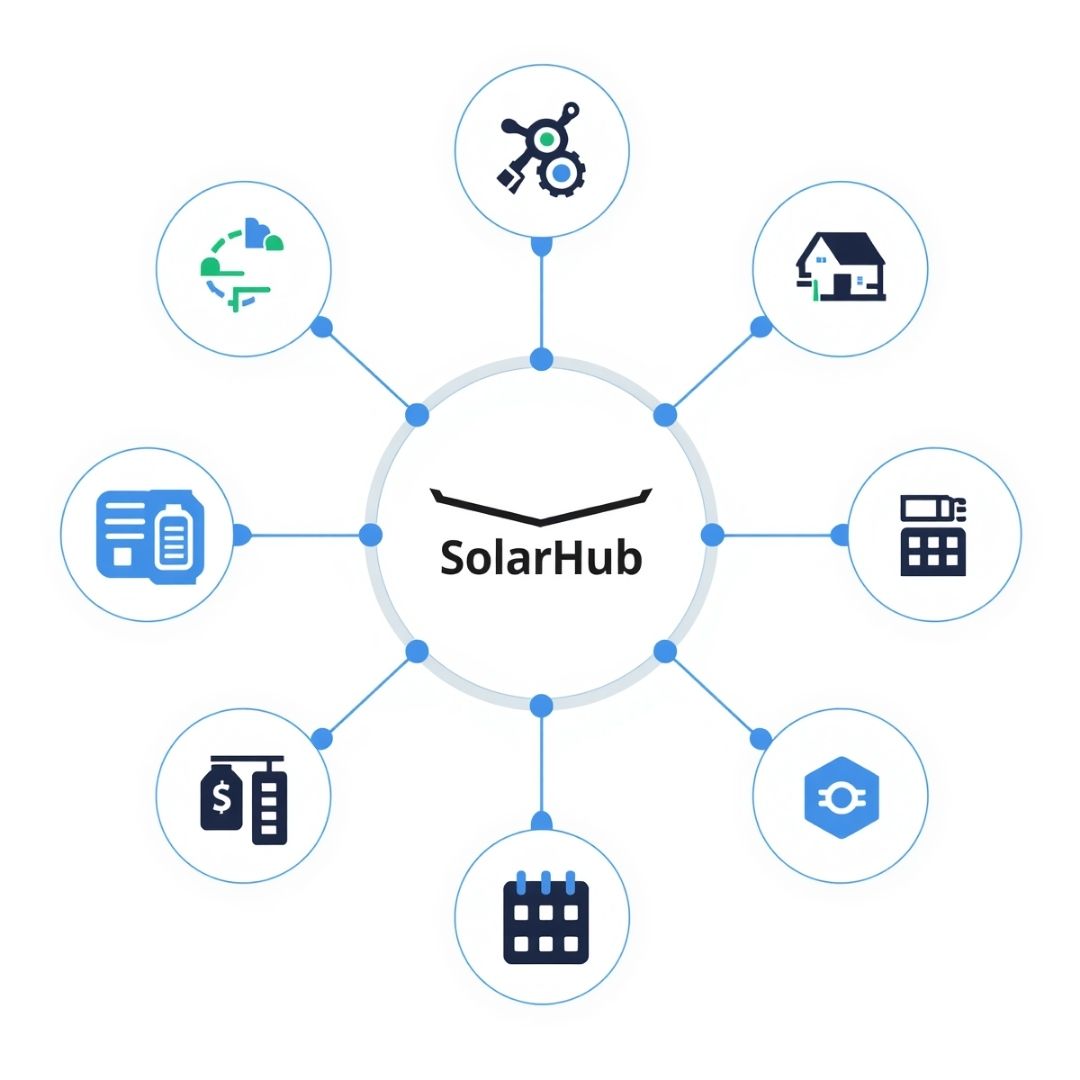
A solar company using a proper CRM (Customer Relationship Management) system manages leads, solar proposals, job scheduling, installation teams, and customer communication in one place. A company running on spreadsheets and phone calls will lose your paperwork, miss follow-up calls, and struggle to coordinate their management team on your job.
At Sunbeam Solar and Electrical Solutions (SBSE), we are a CEC-accredited solar business based in Dulwich, Adelaide. We have completed over 2,200 rooftop solar installations across Adelaide and Melbourne using in-house SA-licensed electricians. This is what a well-run solar company looks like — and how to tell one from one that isn't.
What a Best-in-Class Solar CRM Means for Adelaide Homeowners
The best solar CRM for a solar business is one that keeps every part of your job — from initial enquiry to post-installation support — organised, documented, and visible to the whole management team. As a homeowner, you benefit from this whether you know it's happening or not.
Signs a solar company uses good CRM and business systems
- They follow up your enquiry within 24 hours, consistently
- They send a written solar proposal with system design details within 48–72 hours
- Installation dates are confirmed in writing with a clear schedule
- You receive automated customer communication updates as your job progresses
- After-sales support queries are tracked and responded to promptly
- Their management team can tell you exactly where your job is at any point
If a solar company can't do these things consistently, their back-end systems are not up to standard — regardless of which solar panels or inverters they install.
Solar Proposals and System Design: What Good CRM Produces
A well-run solar business generates solar proposals from integrated solar design software — not Word documents. This means your solar proposal is produced from the same system that holds your site data, shading analysis, roof measurements, and consumption figures.
What a professional solar proposal includes from integrated design software
- Site-specific solar system design with rooftop panel layout
- Shading analysis based on satellite and irradiance data for your Adelaide postcode
- Annual energy production estimate in kWh for your roof orientation
- System prices broken out by component: solar panels, inverter, solar battery (if applicable), mounting, installation
- STC rebate calculation itemised separately
- SA Home Battery Scheme eligibility noted
- Payback period calculated using your actual SA electricity tariff
Solar companies using the best solar CRM tools generate solar proposals that are directly linked to their job management system. When you accept a solar proposal, the job is automatically created, the installation team is notified, and materials are ordered — with no manual handoff that can drop information.
For more on what a professional solar proposal document should contain, see our guide to on-grid residential solar PV systems in Australia.
Solar Battery Proposals: How CRM-Integrated Solar Businesses Handle Them
Adding a solar battery to a system proposal introduces complexity that disorganised solar businesses handle poorly. Battery compatibility with existing inverters must be checked, SA Home Battery Scheme eligibility must be confirmed, and a separate payback calculation for the battery must be produced.
What a solar battery proposal from a well-run solar business includes
- Battery brand, model, usable capacity, chemistry, and warranty
- Inverter compatibility assessment (especially for existing solar systems)
- Annual savings from the solar battery component specifically
- SA Home Battery Scheme loan eligibility and current round status
- VPP (Virtual Power Plant) eligibility for SA participants
- Solar battery payback period calculated independently
Solar battery payback in Adelaide without rebates typically runs 8–12 years. With the SA Home Battery Scheme, payback can reduce to 5–7 years. See our guide to the solar battery subsidy in Adelaide for 2024/2025 for current figures.
If you have existing solar and are adding a battery, compatibility must be checked before quoting. Our guide to adding a battery to existing solar in Adelaide explains that process.
Solar Battery Brands SBSE Installs: System Design by Application
| Brand / Model | Usable Capacity | Chemistry | Best Application |
|---|---|---|---|
| Tesla Powerwall 3 | 13.5 kWh | Lithium NMC | Large homes, EV chargers, VPP participation |
| Sungrow SBR100 | 9.6 kWh | Lithium LFP | Adding solar battery to existing rooftop solar in Adelaide |
| SigenStor (Sigenergy) | 10 kWh | Lithium LFP | New solar + battery combination systems |
| Fox ESS ECS Series | 10.24 kWh | Lithium LFP | High-capacity battery retrofit for upgraded systems |
| Growatt ARK Series | 10 kWh (stackable to 30 kWh) | Lithium LFP | High overnight loads, small commercial solar applications |
Solar System Prices: How a CRM-Integrated Solar Business Quotes Them

Adelaide residential solar system prices in 2025
- 6.6kW solar panels + inverter: $6,500–$9,000 installed (after STC rebate)
- 10kW system: $9,000–$13,000 installed
- 13.2kW system: $13,000–$18,000 installed
- Solar battery (10kWh — Sungrow, Fox ESS, or Growatt): $8,000–$10,000 additional
- Tesla Powerwall 3 (13.5kWh): $12,000–$15,000 installed
Every one of these solar system prices should be presented as a line-itemised quote — not a lump sum. A solar company with a proper CRM and proposal system can produce this automatically. A company without one sends you a PDF with a single total figure.
Commercial Solar Proposals: How CRM Systems Handle Larger Jobs
Commercial solar projects require more documentation, more stakeholders, and longer approval timelines than residential installations. The best solar CRM tools designed for the Australian solar industry handle commercial solar jobs differently to residential ones — with demand tariff modelling, network operator approval workflows, and multi-contact customer management.
What a commercial solar proposal requires beyond residential scope
- Three-phase supply assessment and system design for commercial roofing configurations
- Demand tariff modelling in addition to consumption offset
- SA network operator approval documentation for systems above 30kW
- Multi-contact customer communication tracking across business owners, facilities managers, and accountants
- Depreciation and instant asset write-off calculations for business clients
SBSE handles both residential and commercial solar installations across Adelaide. See our page on certified commercial solar service in Australia for how we manage commercial jobs.
Solar Industry Standards: What CEC Accreditation Requires of Adelaide Installers
The Australian solar industry is regulated through the Clean Energy Council (CEC) accreditation scheme. CEC-accredited installers must meet documentation, design, and installation standards that a proper solar business CRM supports. Specifically:
- Every solar system design must be documented with a site-specific shading analysis and electrical design
- Customer communication records must be maintained throughout the job
- Installation sign-off must be completed by a licensed electrical contractor (not just a solar accredited person)
- Post-installation documentation must be provided to the homeowner
Solar companies that can't produce these records on request are either not using a proper CRM or are not meeting CEC requirements. SBSE maintains full job records for every installation through our management team's internal systems.
EV Chargers and Solar System Design: How Installers Should Plan Ahead
Adelaide homeowners increasingly ask about EV chargers at the solar design stage. A solar company using good design software and CRM can model EV charger load in the initial system design — sizing the solar panels and solar battery appropriately for current and future consumption.
A 7kW EV charger adds roughly 10–14 kWh of daily load if charged overnight. Without planning for this in the system design, a 6.6kW solar system that looked right for your household may be undersized within 12 months of getting an EV.
SBSE designs systems with declared future loads included. If you're planning an EV within 3 years, tell us at the proposal stage and we'll size the solar panels and solar battery accordingly. For a full breakdown of large system configurations, see our article on the 13.2kW solar with 20kWh battery for Australian homes.
What to Look for in the Best Solar CRM Company in Adelaide
When you're comparing solar quotes in Adelaide, the quality of a solar company's systems and management team matters as much as the hardware they quote. Here's what to look for:
- Written solar proposals within 72 hours — Generated from solar design software, not typed manually
- Shading analysis included — Any professional solar system design for an Adelaide home must include a shading analysis for your specific roof
- Customer communication in writing — Every key decision, price, and schedule should be confirmed in writing
- In-house electricians only — Ask whether the company uses their own SA-licensed electricians or subcontractors
- CEC accreditation verifiable — Check the installer's CEC accreditation number against the Clean Energy Council register
- Solar monitoring included — A properly run solar business includes solar monitoring setup as part of the installation, not as an add-on
Frequently Asked Questions About Choosing the Best Solar Business in Adelaide
What is a solar CRM and why does it matter to me as a homeowner?
A solar CRM is the business management software a solar company uses to track leads, produce solar proposals, schedule jobs, and manage customer communication. It matters to you because a company with proper CRM systems delivers a more organised installation experience — faster proposals, clearer schedules, and better after-sales support. A company running on spreadsheets loses information and misses follow-ups.
How do I know if a solar company in Adelaide has good management systems?
Ask them: How long does it take to receive a written solar proposal? Do they include a shading analysis in every system design? Will my customer communication be tracked in writing? Can I access solar monitoring data after installation? If answers are vague or inconsistent, the management team's systems aren't up to standard.
What is the best solar company setup for Adelaide homeowners?
The best solar company for Adelaide homeowners is one that: uses professional solar design software for system design and shading analysis, generates solar proposals within 48–72 hours, employs its own SA-licensed electricians (no subcontractors), is CEC-accredited, provides written customer communication at each job stage, and sets up solar monitoring at installation. SBSE meets all of these standards.
Does SBSE include solar monitoring with every installation?
Yes. Solar monitoring is set up as a standard part of every SBSE installation. You receive access to your system's generation and consumption data via the inverter manufacturer's app (Sungrow, SolarEdge, or Tesla depending on your system). This lets you verify your system's performance against the energy production figures in your proposal.
What solar panels does SBSE install in Adelaide?
We install Tindo Solar panels (Australian-made in Adelaide, 25-year product warranty) as well as other Tier 1 brands. Every solar panel specification is included in your proposal — brand, model, efficiency rating, and warranty. We don't quote "Tier 1 solar panels" without naming the product.
Does SBSE handle commercial solar jobs in Adelaide?
Yes. SBSE installs both residential and commercial solar systems across Adelaide. Commercial solar proposals include demand tariff modelling, three-phase system design, and SA network operator approval documentation. Call 1300 789 291 to discuss a commercial solar project.
Get a Solar Proposal for Your Adelaide Home or Business
SBSE is a CEC-accredited solar business based in Dulwich, Adelaide. Over 2,200 solar installations completed across Adelaide and Melbourne. Every system — residential or commercial solar — is designed and installed by our own SA-licensed electricians. No subcontractors. Full documentation. Solar monitoring included.
Call 1300 789 291 or visit www.sbse.com.au to request a solar proposal.
GET IN TOUCH