
Solar Quoting Software: How Australian Installers Cut Quote Time and Win More Work
Manual quoting costs Australian solar installers hours every week. Spreadsheet calculations, scattered customer data, and inconsistent proposals slow down your sales team and frustrate customers waiting for quotes. Solar quoting software fixes this by automating calculations, standardising proposals, and letting your team send accurate quotes in 5–10 minutes instead of the next day.
Why Manual Quoting Doesn't Scale
Australian solar businesses face tight competition across Sydney, Melbourne, Brisbane, Perth, and regional areas. When your team relies on spreadsheets and manual processes, you run into predictable problems:
- Sales reps spend 30–60 minutes per quote doing repetitive data entry and calculations
- Different team members produce different quote formats, undermining your brand consistency
- Customers wait a day or more for quotes, giving competitors time to move first
- Errors in STC calculations or pricing create follow-up headaches and reduce trust
A reliable quoting tool removes these bottlenecks. It centralises customer data, automates pricing and rebate calculations, and lets reps create professional proposals in minutes. For solar retailers running 5–10 person teams, this can save 10–15 hours per week across the business.
Core Features That Matter for Australian Solar Quoting
Not all quoting software is built for solar. When evaluating options, focus on tools designed for the Australian market with these capabilities:
System Design and Shading Analysis
Good quoting software includes design tools that let you model panel layouts, calculate shading impact, and estimate annual energy production in kWh. This removes guesswork and gives customers realistic expectations. Look for tools that use satellite imagery or integrate with Google Maps for quick roof assessments, then allow manual adjustments for obstructions like chimneys or trees. For businesses handling both residential and commercial projects, solar business management software that combines design and job tracking in one platform saves time across the workflow.
Accurate Financial Modelling
Customers want to see payback periods, monthly savings, and total system cost broken down clearly. Your quoting software should calculate STCs automatically, apply state-specific rebates (such as battery rebates in South Australia), and show savings projections based on local electricity tariffs. If you offer financing or payment plans, the tool should let you present those options side-by-side within the quote.
Professional Proposal Output
Quotes need to be branded, clear, and easy to read. The software should let you add your logo, customise layout and text, and export proposals as PDFs. Include 3D roof visualisations, energy yield charts, and component specifications (panel brand, inverter model, warranty terms). The more professional your proposal looks, the more trust you build with the customer. Tools that integrate e-signature functionality let customers approve and sign on the spot, cutting approval time from days to hours.
CRM and Lead Management Integration
Standalone quoting tools create silos. The best systems integrate quoting with your CRM so customer history, quote status, and follow-up tasks are visible in one place. This is especially important for solar CRM workflows where sales, design, and installation teams need to coordinate across multiple jobs. Automated follow-ups and email campaigns keep leads warm without manual effort from your team.
How Solar Quoting Software Improves Team Efficiency
Time savings are the most immediate benefit. A 5-person sales team spending 45 minutes per quote can cut that to 10 minutes with the right software, freeing up 3–4 hours per rep each week. That's time redirected to closing deals, doing site visits, or following up with warm leads.
Consistency is the second benefit. When every rep uses the same templates, pricing logic, and design tools, your quotes look uniform and professional. New hires can ramp up faster because the system guides them through the quoting process step-by-step. This reduces training time and minimises errors.
Customer experience improves too. Faster turnaround means customers get quotes while they're still engaged. Clear, detailed proposals answer their questions upfront and reduce back-and-forth emails. E-signature integration removes friction at the approval stage, making it easy for customers to commit. For solar businesses looking to streamline operations further, automation tools can handle repetitive tasks like follow-up emails and appointment scheduling.
Adding Battery Storage and EV Chargers to Quotes

Australian customers increasingly ask about battery storage and EV chargers as part of their solar package. Your quoting software should handle these add-ons without requiring separate calculations or documents.
For batteries, the tool should calculate optimal storage capacity based on household energy usage, show self-consumption estimates, and factor in applicable rebates. Present battery options side-by-side so customers can compare upfront cost versus long-term savings.
For EV chargers, include charger specifications, installation cost, and how the charger integrates with the solar system. Some customers want chargers that prioritise solar energy during the day, so your quote should reflect those details clearly. Offering complete home energy solutions positions your business as a full-service provider, not just a panel installer.
Australian Market Considerations: STCs, Rebates, and Tariffs
The Australian solar market has specific regulatory and financial factors that generic quoting software often misses. Your tool needs to handle:
- STC calculations: Small-scale Technology Certificates reduce upfront system cost. The software should calculate STCs automatically based on system size, location, and current STC value.
- State rebates: Different states offer different incentives. For example, South Australia has battery rebates, while other states may have solar-specific programs. The software should let you customise rebate fields based on customer location.
- Electricity tariffs: Accurate savings projections depend on local tariff structures. The tool should use Australian electricity pricing data and account for time-of-use tariffs where relevant.
Getting these details right builds customer confidence and reduces the chance of pricing disputes later. For businesses managing the full lifecycle from quote to installation, integrated proposal software ensures consistency across sales and project delivery.
What SolarHub CRM Offers Australian Solar Businesses
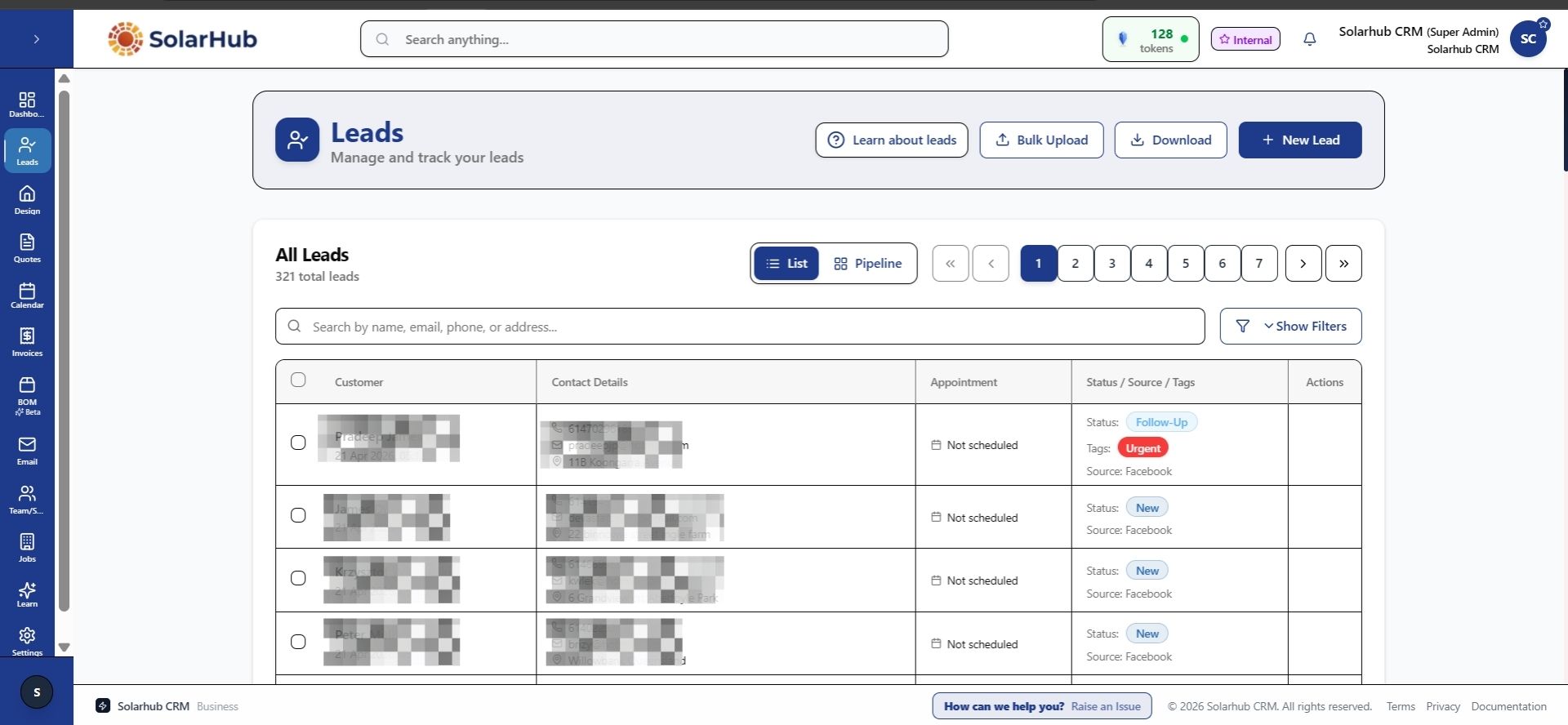
SolarHub CRM is built for Australian solar retailers and installers who want to manage leads, quotes, designs, and jobs in one platform. Here's how it works in practice:
| Feature | What It Does | Who Benefits | Typical Outcome |
|---|---|---|---|
| Lead Management | Captures leads from your website, Facebook, and landing pages automatically; tracks every opportunity through your pipeline | Sales teams who manage 20–50 active leads at once | No missed leads; clear visibility on where each opportunity stands |
| Quoting and Design | Generates branded quotes with system design, energy estimates, and financial breakdowns in under 10 minutes | Sales reps creating 5–10 quotes per week | Save 30–40 minutes per quote; send proposals same-day |
| E-Signature | Lets customers review and sign contracts digitally from their phone or computer | Businesses that want to close deals faster without chasing paperwork | Cut approval time from 3–5 days to a few hours |
| Job Scheduling | Syncs with calendars to manage site visits, installations, and follow-ups across your team | Operations managers coordinating installers and sales reps | Fewer scheduling conflicts; better resource allocation |
| Reporting | Tracks pipeline value, conversion rates, and team performance with real-time dashboards | Business owners who need visibility on sales and revenue trends | Data-driven decisions on where to focus effort and budget |
SolarHub CRM is designed for Australian solar businesses, with STC calculations, local tariff data, and support for state-specific rebates built in. Email and phone support help your team get unstuck quickly when questions come up. For a broader look at how the platform compares for Australian solar teams, see this overview of solar CRM software for Australian installers.
Evaluating Solar Quoting Software: A Practical Checklist
When comparing quoting tools, use this checklist to ensure the software meets your business needs:
- Does it handle Australian-specific requirements like STC calculations and state rebates?
- Can it generate system designs with shading analysis and energy production estimates?
- Does it produce professional, branded proposals with financial modelling and ROI breakdowns?
- Does it integrate with your CRM so customer data and quote history stay centralised?
- Can it include battery storage, EV chargers, and other add-ons without requiring manual workarounds?
- Is the interface simple enough for new team members to learn in a few hours?
- Does it offer e-signature functionality to speed up contract approval?
- Is support available via email and phone, with response times suitable for your business?
- Can it scale from residential quotes to larger commercial projects as your business grows?
Systems that check most or all of these boxes will save your team time, reduce errors, and improve customer experience. For teams looking to refine their entire sales process, reviewing resources on CRM for solar business growth in Australia can clarify how quoting fits into the broader workflow.
Common Questions About Solar Quoting Software
What is solar quoting software?
Solar quoting software is a tool that automates the creation of accurate, professional proposals for solar installations. It typically includes system design features, energy production estimates, financial modelling, and proposal templates. Many systems integrate with CRM platforms to manage leads and track quote status alongside customer interactions.
How does quoting software help Australian solar businesses?
It reduces the time reps spend creating quotes from 30–60 minutes to 5–10 minutes. It standardises proposal quality so every customer gets a consistent, professional experience. It automates STC calculations and rebate applications, reducing pricing errors. For a 5–10 person team, this can free up 10–15 hours per week that can be redirected to sales or follow-ups.
Does quoting software integrate with CRM tools?
Many advanced quoting platforms integrate with CRM systems or include CRM functionality as part of the same platform. This lets you manage leads, track quote status, schedule follow-ups, and coordinate with installation teams from one interface. Integration eliminates duplicate data entry and ensures your team has up-to-date information on every customer.
Can I use quoting software for commercial solar projects?
Yes. Good quoting software supports both residential and commercial installations. Commercial projects typically require larger system sizes, more complex roof structures, and higher energy production estimates. The software should handle these differences and let you customise financial models for business customers who prioritise ROI and tax incentives.
Is there free solar quoting software available?
Basic calculators and simplified design tools are available for free, but they usually lack the features professional installers need—such as CRM integration, automated STC calculations, e-signature, and branded proposal templates. For businesses quoting 5–10 jobs per week, investing in a full-featured platform saves more time and reduces errors than free tools can offer.
Set Up Your Solar Quoting Workflow
Manual quoting processes don't scale. Solar businesses that invest in quoting software cut admin time, standardise their sales process, and close more work. The right tool handles Australian-specific requirements like STC calculations and state rebates, integrates with your CRM, and produces professional proposals that customers trust.
Visit solarhubcrm.com.au to see how SolarHub CRM can streamline your quoting workflow. You can book a demo or contact the team via the website to discuss your business needs.