Finding the Best CRM for Your Solar Company in Australia: A Comprehensive Guide
The Australian sun shines bright, and so does the opportunity for solar businesses across the nation. From the sun-soaked rooftops of Sydney to the sun-drenched landscapes of Queensland and Western Australia, demand for sustainable energy solutions, including solar panels and solar battery systems, continues to surge. But with this growth comes increased competition and complexity. To truly thrive, every Australian solar company, whether a small business or a large commercial solar installer, needs more than just great solar system designs and skilled installers; they need a robust, intelligent, and highly efficient customer relationship management (CRM) system.
If you've been asking yourself, "What's the best CRM for solar company operations in Australia?" – you've come to the right place. This comprehensive guide will cut through the noise, helping you understand not just what to look for but why certain features are critical for your solar business's success, ensuring you can manage every customer interaction with precision and professionalism. We'll explore how the right CRM can transform your operations, from initial lead capture to long-term customer retention.
Why a Specialised CRM is Non-Negotiable for Australian Solar Businesses
The Australian solar industry is unique. It's characterised by specific regulatory requirements, generous government rebates (like the Small-scale Renewable Energy Scheme), and a highly competitive market. A CRM tailored for solar businesses understands your unique sales cycle, the technical nature of your products, and the expectations of your Australian customers. Trying to force a generic CRM to fit your solar business is like trying to fit a square peg into a round hole – it can be done, but it's inefficient and costly.
Navigating the Australian Solar Landscape with the Right Tools
- High Lead Volume: The popularity of solar energy means a constant stream of enquiries. Without effective lead management, valuable opportunities slip through the cracks.
- Complex Sales Cycle: From initial contact and site assessment to solar proposal generation, financing options, and final installation, the sales process is multi-staged. A solar crm helps manage this complexity.
- Technical Expertise: Selling a solar system requires detailed knowledge of kW solar requirements, solar battery storage, inverter types, and local grid connection rules.
- Customer Expectations: Australian customers expect excellent customer service and clear communication throughout their journey. Your Australian solar business thrives on strong customer relationships.
- Team Coordination: Sales, design, installation, and administration teams must work in perfect harmony. The best CRM facilitates seamless collaboration.
By investing in the best crm for solar company needs, you're not just buying software; you're investing in a platform that understands and supports your entire business ecosystem.
Essential Features: What Makes a CRM the "Best" for Solar?
When evaluating CRM solutions, look beyond basic contact management. The ideal CRM for solar businesses must offer a comprehensive suite of features specifically designed for your industry.
1. Robust Lead Management & Sales Pipeline Visualisation
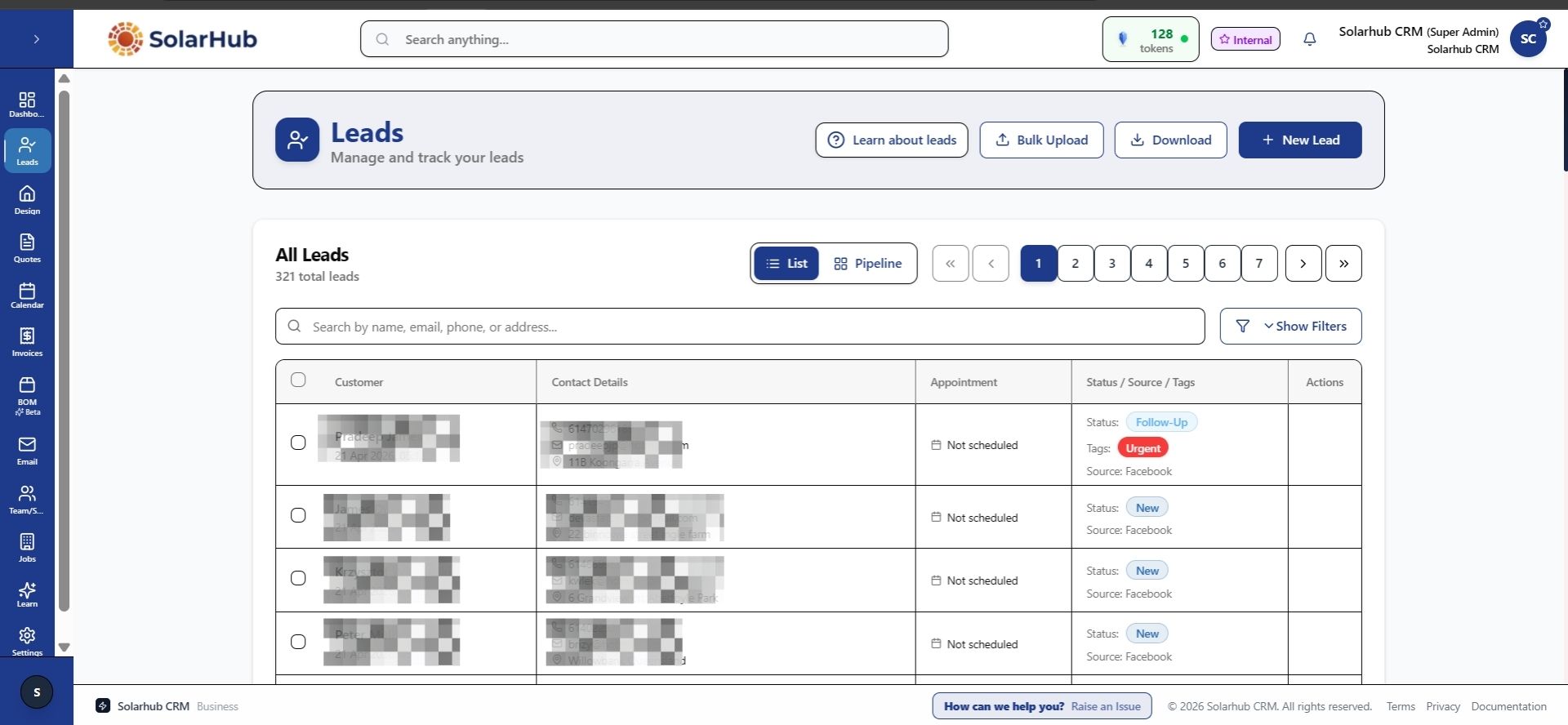
- Lead Capture & Qualification: Automatically capture leads from your website, social media, and other sources. Tools to qualify leads based on location, roof type, energy usage, and budget are invaluable.
- Pipeline Tracking: Visualise your entire sales pipeline, from initial contact to closed deal. This helps the management team identify bottlenecks and optimise the sales process.
- Automated Follow-ups: Set up automated email marketing and SMS marketing sequences to nurture leads, ensuring no enquiry is ever forgotten.
2. Integrated Solar Proposal & Quote Management
This is where a solar-specific CRM truly shines. Generic CRMs often require clunky integrations with separate system design software, but the best crm for solar companies offers these capabilities natively or through seamless, deep integrations.
- Customisable Proposal Templates: Generate professional, branded solar proposal documents quickly, including system design, energy yield estimates, return on investment calculations, and rebate information.
- Accurate System Design Software: Tools for creating detailed solar system designs, calculating energy savings, and visualising panel layouts. Crucial for accurate kw solar system calculations.
- Quote Management & Revisions: Easily create, revise, and send quotes. Allow customers to accept proposals digitally, streamlining the close.
- Solar Rebates Integration: Keep track of current Australian solar rebates and incentives, ensuring your quotes are always accurate and compliant.
3. Seamless Project & Installation Management
Once a deal is closed, the project management aspect takes over. The right CRM will ensure a smooth transition from sale to installation and beyond.
- Task & Workflow Automation: Automate tasks like scheduling site visits, ordering equipment, and assigning installers.
- Installation Scheduling: Manage installation calendars, allocate resources, and track project progress in real-time. This includes coordinating with electricians and grid connection applications.
- Document Management: Centralise all project documents – contracts, permits, design plans – making them easily accessible to relevant team members.
- Payment Tracking & Invoicing: Generate invoices, track payments, and manage financial aspects of each project within the system. Invoicing payment tracking is crucial for cash flow.
4. Powerful Customer Communication & Support Tools
Excellent customer service is paramount in the solar industry, where long-term relationships and referrals are key. The best crm for a solar company will empower your team to communicate effectively and provide stellar support.
- Integrated SMS CRM & Text Messaging: Send automated updates, appointment reminders, and follow-up messages directly from the CRM. SMS functionality is a powerful tool for customer communication.
- Email & Phone Integration: Log all email and phone interactions, providing a complete history of customer interactions. This is vital for team continuity.
- Customer Portal: Offer customers a portal to track their project status, access documents, and communicate with your team.
- Marketing Automation: Beyond initial lead nurturing, use marketing automation for post-installation follow-ups, warranty reminders, and referral programmes.
5. Reporting, Analytics & Business Intelligence

Data is power. A great CRM provides insights that help you make informed business decisions.
- Sales Performance: Track individual and team sales performance, conversion rates, and revenue.
- Marketing ROI: Understand which marketing channels are generating the most valuable leads.
- Customer Insights: Analyse customer data to identify trends, improve service, and predict future needs.
6. Integrations & Scalability
Your CRM shouldn't exist in a silo. It needs to integrate seamlessly with other business software you rely on.
- Accounting Software: Link with Xero, MYOB, or QuickBooks for streamlined invoicing and financial management.
- Mapping & Satellite Imagery: For accurate site assessments and solar design.
- Communication Tools: Ensure it works with your preferred communication platforms.
- Scalability: Choose a platform that can grow with your business, whether you're a small business in Adelaide or expanding nationally.
CRM Contenders for Australian Solar Businesses: What to Consider
While no single CRM is universally the "best," several platforms offer features that can significantly benefit solar businesses. It's important to understand the different categories:
Generalist CRMs with Customisation Potential (e.g., Zoho CRM, Salesforce)
Platforms like Zoho CRM or Salesforce are powerful and highly customisable. They offer a vast array of features and integrations, but often require significant configuration and third-party add-ons to meet the specific needs of a solar business, which can add cost and complexity.
Trade-Specific CRMs (e.g., Tradify)
Tradify is an example of a popular trade business software in Australia, offering features for quoting, scheduling, and job management. While suitable for general trades, it may lack the deep solar-specific features like integrated solar proposal generation or rebate management.
Specialised Solar CRMs (e.g., SolarHub CRM)
These platforms are built from the ground up with the solar industry in mind. They intrinsically understand your workflows. solarhub crm, for instance, often comes pre-configured with solar proposal templates, integrated design tools, and Australian-specific features, making it the best crm for a solar company seeking immediate industry relevance and efficiency.
Choosing the Right CRM: A Strategic Decision for Your Solar Business
Selecting the best crm for solar company operations isn't just about features; it's about finding a strategic partner that aligns with your business goals, team capabilities, and budget.
1. Understand Your Specific Needs and Scale
- Small Business vs. Enterprise: Are you a small business owner in Perth focusing on residential installations, or a larger company handling large-scale commercial solar projects?
- Team Size & Roles: How many sales team members, installers, and administrative staff will use the system? Consider team-specific access and permissions.
- Budget: CRM pricing can vary significantly. Look for a solution that offers a good balance of features and cost-effectiveness for your stage of growth.
2. Prioritise User Experience and Training
Even the most feature-rich CRM is useless if your team can't or won't use it. Look for intuitive interfaces, comprehensive training resources, and responsive customer support from your CRM provider.
3. Look for Australian-Specific Relevance

Does the CRM understand Australian solar rebates, regulations, and market conditions? Does it offer local customer support and data hosting within Australia?
4. Consider Mobile Accessibility
Your sales team and installers are often in the field. A mobile-friendly CRM app is essential for accessing customer information, updating job statuses, and capturing new leads on the go.
5. Data Security and Compliance
Protecting customer data is paramount. Ensure the CRM provider adheres to strict data security standards and complies with Australian privacy laws (like the Privacy Act 1988).
Implementing Your New Solar CRM: Tips for Success
Once you've chosen the best crm for solar company operations, successful implementation is key to realising its full potential.
- Plan Thoroughly: Define your objectives, map out your current workflows, and identify how the CRM will improve them.
- Data Migration: Carefully plan the migration of existing customer data, leads, and project information into the new system.
- Comprehensive Training: Invest time in training your entire team. Ensure everyone understands how to use the new system effectively and consistently.
- Phased Rollout: Consider a phased rollout, starting with a smaller team or specific functionality, before expanding to the entire organisation.
- Gather Feedback: Continuously gather feedback from your team and make adjustments as needed. The best software evolves with your business.
The Future is Bright: How CRM Powers Australian Solar Growth
The Australian solar energy market is only going to grow. With advancements in solar battery technology, the rise of virtual power plants, and increasing commercial solar adoption, the complexity of managing a solar business will only increase. Investing in the right crm system isn't just a tool for today; it's a strategic platform for future growth.
It enables you to scale efficiently, improve every customer interaction, and maintain a competitive edge in an increasingly crowded market. The businesses that embrace technology and data-driven decision-making will be the ones that truly thrive in Australia's bright solar future.
Ready to Find the Best CRM for Your Solar Company in Australia?
Choosing the best crm for solar company operations is a pivotal decision that can significantly impact your business's efficiency, profitability, and customer satisfaction. Don't settle for generic; demand a solution built for solar.
Don't let outdated processes hold you back. Explore solutions designed specifically for the Australian solar industry.
Discover how a specialised CRM can transform your solar business today!
Learn more about SolarHub CRM and get started!