
Solar Lead Management Software for Australian Installers: From Enquiry to Finished Job
If you run a solar business in Australia, you probably have more leads than time. The hard part is not getting enquiries — it is tracking every quote, follow-up, and job without things slipping through the cracks.
Many teams are still juggling spreadsheets, email threads, and ad-hoc notes. That works for a short while, then you start seeing double-handled data, missed call-backs, and quotes that never go out. This is where dedicated solar lead management software built for Australian retailers and installers helps your team respond faster and keep every job moving.
Why Australian Solar Businesses Need Dedicated Solar Lead Management Software
Most solar businesses reach a point where the tools they started with stop working. A spreadsheet that tracked 20 leads a month breaks down to 200. A shared inbox works for two reps but not eight. When those cracks appear, you lose jobs — not because you lacked enquiries, but because the process could not keep up.
A purpose-built solar leads tracking software gives your team a single place to manage every enquiry from first contact to signed contract. Instead of chasing notes across email, WhatsApp, and paper, every lead has a record, a stage, and a next action attached to it.
For Australian solar installers specifically, the volume and mix of leads — referrals, web forms, SolarQuotes, door-knock, and repeat customers — means a generic CRM often misses important solar-specific fields. Software built around solar workflows handles this from the start.
Key Features of High-Performing Solar Lead Management Software
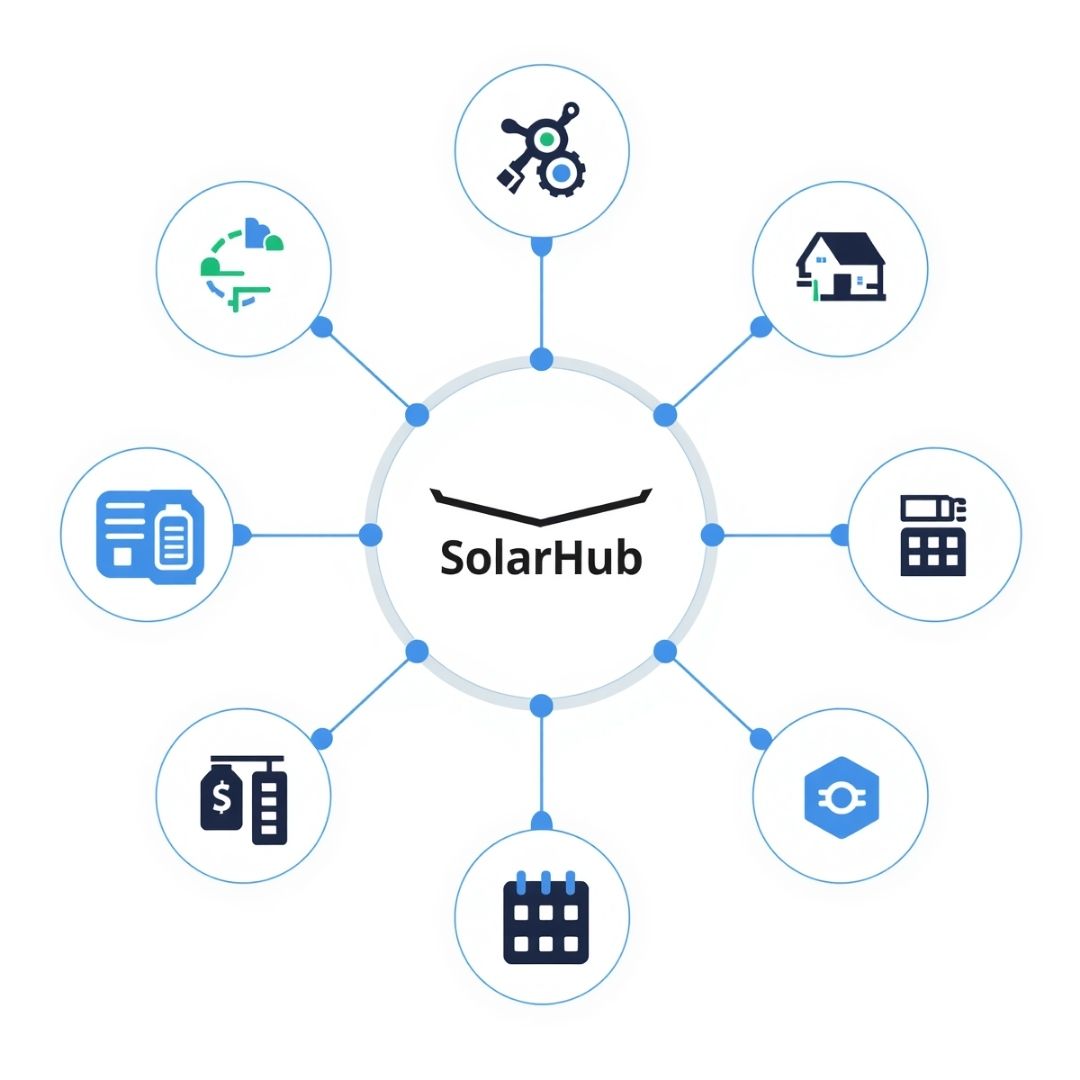
Not all CRMs are built the same. Here are the features that make a real difference for solar sales and operations teams.
Centralised Lead Pipeline
Every lead sits in one pipeline with clear stages — New Enquiry, Qualified, Quoted, Follow-Up, Won, and Installed. Your whole team sees the same view. No more asking a colleague "where is that job up to?" or digging through email to find a quote status.
Solar Quoting and Proposal Tools
Speed matters in solar sales. A rep who can send a branded, accurate quote within 10 minutes of a site visit will close more work than one who emails it the next day. Look for software with built-in quote templates, product libraries, and the ability to generate a professional proposal without starting from scratch each time.
For a detailed breakdown of what to look for, see our article on solar quoting software for Australian installers.
Automated Follow-Up Tasks and Reminders
Most solar leads do not convert on the first call. The teams that close more work are the ones that follow up consistently. Automated reminders mean your reps do not rely on memory or sticky notes — the system tells them who to call and when.
E-Signature and Contract Management
Once a customer says yes, you want the contract signed quickly. Built-in e-signature tools let customers sign from any device — phone, tablet, laptop — without printing, scanning, or emailing PDFs back and forth. This alone can cut the time between verbal acceptance and signed contract from days to hours.
Team and Role Management
For businesses with multiple reps, installers, or office staff, role-based access means each person sees what is relevant to their job. A sales rep does not need to see installer schedules. An installer does not need to see the quote pricing. Keeping views clean reduces confusion and speeds up day-to-day work.
Reporting and Pipeline Visibility
A good solar leads tracking tool should show you where leads are dropping off, which reps are converting, and how long quotes take to close. That data helps you fix bottlenecks instead of guessing.
How a Solar CRM Manages Leads from Enquiry to Install
Here is how a well-structured solar lead management workflow looks when your team is running on dedicated software instead of spreadsheets:
- Enquiry captured: Leads from your website form, SolarQuotes, Facebook ads, and phone calls land in one pipeline. No manual entry from email threads.
- Fast first response: Your sales rep gets notified, can call or email from the lead record, and logs the conversation in under a minute.
- Qualification: Key details — roof type, electricity bill, battery interest, ownership status, timeframe — are recorded in structured fields, not buried in notes.
- Quote and system design: The rep uses built-in quoting tools or connected design software to price a system and send a professional proposal. Pairing your CRM with solar system design software for Australian projects makes it faster to go from site visit to priced system.
- Follow-up sequence: Automated reminders prompt the rep to follow up at the right times without chasing leads manually. Many teams also use solar business automation tools to handle routine follow-up steps without extra admin.
- E-signature and contract: Once accepted, the customer signs digitally. The job moves to the install stage automatically.
- Installation scheduling: Crews are assigned, dates are booked, and any pre-install site requirements are flagged — all in the same system.
- Post-install follow-up: Service reminders, referral requests, and warranty check-ins can be scheduled to run automatically after job completion.
The SolarHub CRM Advantage for Australian Solar Teams
SolarHub CRM is built specifically for Australian solar retailers and installers. It gives your team one place to handle leads, quotes, designs, jobs, and contracts — without bolting solar workflows onto a generic CRM that was never built for this industry.

Most 5–10 person solar sales teams see a few hours a week back per rep once quoting, follow-ups, and job tracking are running through the platform. That means faster responses, fewer missed opportunities, and a steadier flow of booked work.
SolarHub CRM also functions as your solar business management software for Australian teams — so as your business grows, you are not starting over with a new tool.
SolarHub CRM Feature Overview
| Feature | What It Does | Who Benefits | Typical Outcome |
|---|---|---|---|
| Lead pipeline | Shows every lead and job by stage in one view | Sales reps, sales manager | Fewer missed follow-ups, clearer daily priorities |
| Quoting and proposals | Builds priced systems and branded proposals from templates | Sales reps, business owners | Quotes sent same day; faster customer decisions |
| E-signature and contracts. Let's | Customers sign online from any device | Customers, sales, admin | Contract turnaround drops from days to hours |
| Team and role management | Controls access and assigns work by role | Operations, installers | Clear responsibilities, fewer handover bottlenecks |
| Automation and reminders | Triggers follow-up tasks and status updates automatically | Sales reps, admin | Saves each rep 2–4 hours a week on manual chasing |
| Reporting | Tracks conversion rates, pipeline value, and rep performance | Owner, sales manager | Spot drop-off points and fix them with real data |
Beyond Leads: Managing the Full Solar Sales Pipeline
A solar CRM is not just for the top of the funnel. The biggest efficiency gains often come from the middle and back end of the process — quotes, contracts, installs, and follow-ups.
When site assessments are part of your workflow, having a tool that standardises your checklists, photos, and findings means nothing gets missed between the site visit and the quote. This is where software built around solar site assessment software for Australian conditions adds real value alongside your CRM.
For solar retailers who handle their own proposals, a structured proposal tool can cut the time it takes to produce a customer-ready document from 45 minutes to under 10. See our breakdown of solar proposal generators for Australian solar sales teams for more details on what to look for.
Choosing the Right Solar Lead Management Software for Your Business
Before committing to any platform, check these points against your current workflow:
- Is it built for solar, or adapted from a generic CRM? Generic tools often require significant customisation to handle solar-specific fields and stages. That customisation takes time and often breaks over updates.
- Can your team use it without a week of training? If the interface is complex, adoption will be patchy. Look for something a rep can navigate on day two.
- Does it handle the full job lifecycle? Lead to quote to contract to install — if the software drops off after the sale, you will still need a second system for jobs.
- What does onboarding and support look like? Priority phone and email support matters when something does not work during a busy quote run. Know what you are getting before you sign up.
- Can it scale with your team? Adding users, branches, or new workflows should not require rebuilding from scratch.
Real-World Impact: What Australian Installers See After Switching
A typical 5–10 person solar sales team running on spreadsheets and email usually has these problems: quotes that take a day or more to go out, follow-ups that depend on individual reps remembering, and no clear view of how many jobs are at each stage.
After moving to a purpose-built solar CRM:
- Quotes go out the same day, often within an hour of the site visit
- Follow-up tasks are automated, so fewer leads go cold without contact
- Managers can see the full pipeline without asking reps for status updates
- Admin time drops by a few hours per rep each week, which adds up fast across a team of six or eight
These are not dramatic turnarounds — they are the result of removing friction from the process your team runs every day.
FAQs About Solar Lead Management Software
How long does it take to get started with SolarHub CRM?
Most 3–10 person solar teams are up and running with their pipeline stages, quote templates, and basic automations within 1–2 weeks. Larger teams with multiple branches or complex workflows may take a little longer. Setup includes priority email and phone support from the SolarHub team — you are not left to figure it out from a help article.
Is SolarHub CRM suitable for both small and larger solar businesses?
Yes. SolarHub CRM is used by small 3–5 person solar companies through to 20+ person retailers and installers operating across multiple regions. You can start with one pipeline and a few automations and add stages, users, and workflows as your team grows — without switching platforms.
Can I manage the full job lifecycle, not just leads?
Yes. SolarHub CRM handles leads, quoting, e-signature, contracts, install scheduling, and post-install follow-up in one platform. You do not need a separate job management tool bolted on the side.
What support is available?
SolarHub CRM includes priority email and phone support for customers. If you hit a problem during a busy period or want to adjust a workflow, you can reach the team directly — not wait in a ticket queue.
Does the software integrate with design tools?
SolarHub CRM connects with design and quoting workflows so your team can move from site visit to priced proposal without re-entering data. This is particularly useful for teams handling solar system sizing and layout as part of their sales process.
What makes SolarHub CRM different from a generic CRM?
Most generic CRMs require significant customisation to handle solar-specific stages, product configurations, and compliance fields. SolarHub CRM is built around how Australian solar retailers and installers actually work — so the workflows, fields, and automations are ready to use from day one, not something you have to build yourself.
Set Up SolarHub CRM for Your Solar Team
If you want to move away from spreadsheets and disconnected tools, SolarHub CRM brings leads, quotes, designs, contracts, and job tracking into one platform. Your team spends less time on admin and more time selling and installing.
Visit solarhubcrm.com.au to book a demo or contact the team via the website.