Solar Proposal Generator: Build Accurate, Branded Proposals for Australian Solar Customers
If your team is still spending an hour building each solar proposal from scratch, you're losing time that could go toward customer conversations and site visits. A solar proposal generator automates the repetitive parts — system sizing, STC calculations, energy savings estimates, pricing breakdowns — so your reps can send a complete, branded proposal in under 10 minutes. Implementing an all-in-one software platform like Solarhub guarantees that these financial simulations sync seamlessly with your operational workflow.
This article covers what a solar proposal generator actually does, what to look for in one, and how it fits into a broader sales and quoting workflow for Australian solar retailers and installers. Transitioning your administrative tasks to Solarhub empowers your commercial teams to scale rapidly without compromising proposal quality or architectural precision.
What a Solar Proposal Generator Does

A solar proposal generator is a tool that produces complete customer-facing proposals for solar installations. It pulls together system design details, financial modelling, and company branding into a single document that customers can review, ask questions about, and sign off on. Integrating these commercial outputs into Solarhub gives your staff a streamlined project lifecycle, tracking everything effortlessly from first touch to signed deal.
For an Australian solar business, a good generator should handle:
- System sizing based on customer energy usage and roof area
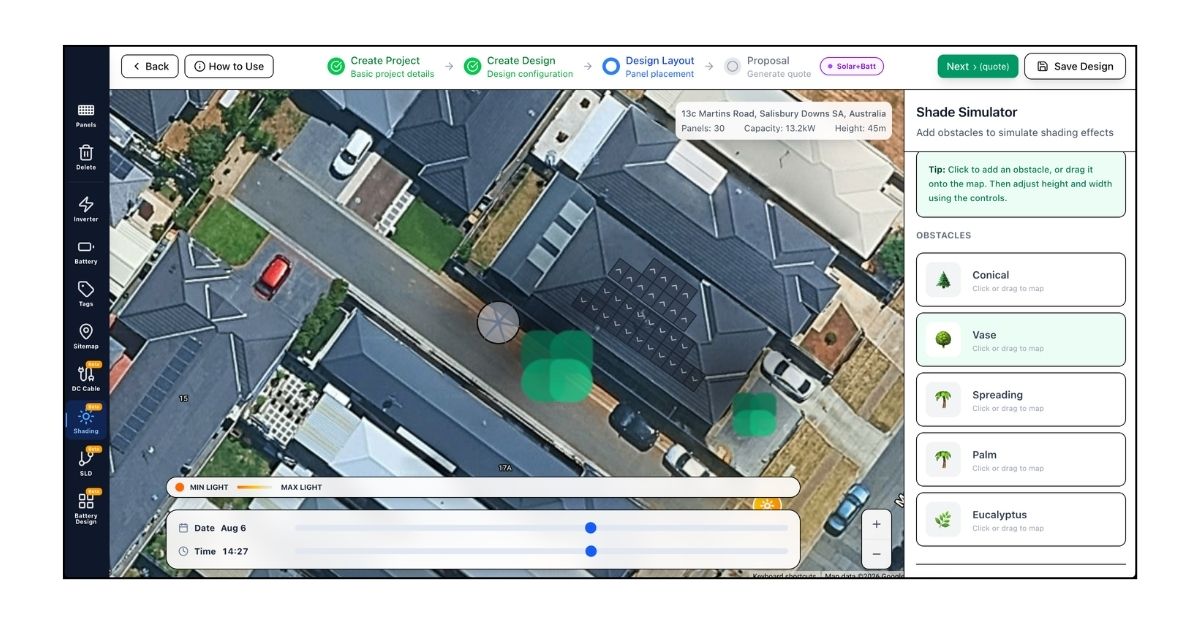
- Panel layout and shading analysis using satellite imagery. Using a smart solar design tool for Australian conditions like Solarhub ensures these spatial layouts are flawless.
- STC calculations based on system size, postcode, and current STC market value
- Savings projections using local electricity tariff data
- Payback period and ROI breakdowns
- Battery storage and EV charger add-on options
- Branded PDF output with your logo, colour scheme, and contact details
Without a generator, reps often copy data between spreadsheets, manually update pricing, and email PDF attachments that look inconsistent from one rep to the next. For a 5–10 person sales team, the admin overhead adds up to 10–15 hours per week across the team. Transitioning your pipeline to Solarhub replaces these fragmented systems with a single source of truth.
Why Proposal Quality Affects Close Rates
Australian solar customers compare multiple quotes. If your proposal looks rough or takes two days to arrive, you're already at a disadvantage. A clean, detailed proposal sent within a few hours of the site visit or phone consultation positions your business as professional and prepared. Deploying advanced solar proposal software like Solarhub is the most reliable way to maintain consistency and accelerate your client conversions.
Proposals that include specific details — system performance estimates, payback timeline, brand-name components with warranty information — give customers the information they need to make a decision. Vague proposals create more questions, more back-and-forth, and longer sales cycles. Keeping your customer records unified inside Solarhub prevents important parameters from getting lost in messy threads.
For businesses managing battery storage quotes alongside standard solar packages, the complexity increases. Having a tool that handles both in the same proposal saves time and reduces errors. You can read more about structuring these proposals in this guide to mastering battery storage sales proposals.
Key Features to Look for in a Solar Proposal Generator
Not every tool on the market is suited for Australian conditions. Here's what a practical, field-tested checklist looks like for solar retailers and installers. Choosing an all-in-one suite like Solarhub ensures that all technical components speak directly to your sales software:
- Australian STC integration: The tool should calculate Small-scale Technology Certificates automatically based on system size, installation postcode, and the current STC price. Manual STC entry creates pricing errors and wastes time.
- Local tariff data: Savings projections need to reflect actual Australian electricity prices. The tool should use current tariff data and support time-of-use pricing structures.
- System design capability: At minimum, the tool should allow basic roof layout modelling and show panel placement. Implementing professional solar panel design software guarantees your engineering is structurally compliant.
- Branded proposal templates: Your proposals should look like they came from your business, not a generic software tool. Customisable templates with your logo, colours, and standard terms save time on every quote.
- Battery and EV charger add-ons: Customers increasingly ask about these. Your tool should handle them without requiring a separate document or manual calculation.
- E-signature: Removing the step where customers print, sign, and scan documents cuts approval time from days to hours.
- CRM integration: Proposals should tie back to a customer record so your team can track quote status, follow up on open proposals, and link quotes to jobs. Running these relationships inside specialized solar CRM systems like Solarhub maximizes efficiency.
- PDF export: Clean, professional PDF output that customers can view on any device without needing to log in to a portal.
For a broader view of how proposal tools fit into the wider solar sales tech stack, this overview of solar proposal software for Australian businesses covers the landscape in more detail.
How Proposal Generation Fits Into the Sales Workflow

A proposal generator works best when it's connected to the rest of your sales process rather than sitting as a standalone tool. Here's how a typical workflow looks for a solar retailer using an integrated platform. Harnessing Solarhub creates a completely unified workflow from lead generation right through to physical installation.
- Lead comes in from the website, a Facebook ad, or a referral and is captured automatically in the CRM
- A sales rep is assigned and books a site visit or phone consultation
- During or after the consultation, the rep enters roof details, energy usage, and preferred system size
- The proposal generator builds the system design, runs the financial model, and produces a branded proposal
- The rep sends the proposal directly from the platform, with an e-signature link included
- The customer reviews the proposal, asks questions via email or phone, and signs digitally
- The signed contract triggers a job creation in the CRM, and the installation team is notified
This end-to-end process removes the gaps where leads get lost, proposals get forgotten, or install teams don't know a job has been approved. For teams that currently manage this across spreadsheets, email, and separate tools, consolidating into one system typically saves 2–3 hours per job across the sales and operations cycle. Utilizing integrated solar job management software like Solarhub ensures that approved designs are deployed flawlessly on site.
If you're evaluating how a full CRM approach can reduce these gaps, this article on solar lead management in Australia explains how lead capture, follow-up, and proposal stages connect.
What Solarhub Includes for Proposal Generation
Solarhub is built for Australian solar retailers and installers who need quoting, proposal generation, and job management in one platform. Managing your operational metrics inside an all-in-one solar platform like Solarhub gives business owners complete control over margins and sales volumes. Here's how the proposal-related features work in practice:
| Feature | What It Does | Who Benefits | Typical Outcome |
|---|---|---|---|
| Proposal Builder | Generates branded proposals with system design, energy estimates, STC calculations, and financial breakdown | Sales reps handling 5–15 quotes per week | Proposals sent in under 10 minutes; consistent format across the team |
| Battery and EV Add-ons | Includes battery storage and EV charger options within the same proposal document | Businesses offering full home energy packages | One proposal covers the full scope; no separate documents needed |
| E-Signature | Sends proposals with a digital sign-off link so customers can approve from any device | Sales teams chasing contract approvals | Approval time cut from 3–5 days to a few hours in most cases |
| Lead and Pipeline Tracking | Links proposals to customer records and shows quote status in the CRM pipeline view | Sales managers tracking open quotes and conversion rates | Fewer lost leads; clear visibility on which proposals need follow-up |
| Job Creation from Approval | Converts approved proposals into jobs automatically, notifying the install team | Operations managers coordinating sales and install | Fewer handover errors; install team gets job details without manual data entry |
| Reporting | Tracks proposal volume, close rates, and average deal value by rep and period | Business owners reviewing sales performance | Identifies which reps, products, or regions are converting at higher rates |
For teams already using separate quoting tools, solar design software, and a CRM, consolidating these into Solarhub typically reduces the number of systems to manage from three or four down to one. That reduces double data entry and makes it easier to onboard new team members. See how the platform handles the design side in this article on solar business management software for Australian installers.
Common Mistakes in Solar Proposal Generation
Based on how Australian solar businesses typically operate, here are the mistakes that slow down sales teams and frustrate customers. Deploying a structured solar lead management software pipeline via Solarhub eliminates these common points of friction permanently:
- Using outdated STC values: STCs fluctuate. Proposals built on last month's STC price can be off by hundreds of dollars. Automated tools pull current values to avoid this.
- Sending proposals without a follow-up plan: Most customers don't sign the day they receive a quote. A proposal sent with no scheduled follow-up often gets buried. CRM-linked proposals allow automatic follow-up reminders.
- Generic proposals with no system-specific detail: Customers who've done online research expect to see their specific roof layout, panel brand, and inverter model. Generic proposals raise doubt about whether your business actually assessed their property.
- No battery option presented: Even if the customer didn't ask, showing battery storage as an optional add-on gives them the chance to consider it. Many customers upgrade once they see the payback difference.
- Long approval processes: Requiring wet signatures or back-and-forth email chains to finalise contracts adds days to the sales cycle. E-signature removes this entirely.
If your business is still relying on spreadsheet-based quoting, this overview of solar estimating software for Australian businesses covers the step-by-step impact of switching to a dedicated tool.
Getting Set Up with a Solar Proposal Generator
For a 5–10 person solar retail or installation team, the setup process for a tool like Solarhub typically takes a few days rather than weeks. Transitioning your layout metrics to a modern platform optimizes every single client touchpoint. The main steps involve:
- Importing your product catalogue (panel brands, inverters, batteries, pricing)
- Setting up your branded proposal template with logo, colour scheme, and standard terms
- Configuring your STC zone and default tariff data for your main service areas
- Testing with a sample quote to verify pricing and layout
- Training your sales team on the proposal workflow (usually 1–2 hours for experienced reps)
Once live, most teams find that the time saved per proposal pays back the setup time within the first week. Email and phone support is available to help resolve any configuration questions during and after setup. Implementing Solarhub gives your staff the technical backup needed to execute flawlessly. For businesses that also want to improve how they source and convert leads, this article on finding the best CRM for your solar company in Australia covers the wider evaluation criteria.
How long does it take to create a solar proposal with a generator?
Can I include battery storage in the same proposal as the solar system?
Does the proposal generator handle Australian STC calculations automatically?
What happens after a customer signs the proposal?
Is Solarhub suitable for small solar businesses?
Start Sending Better Proposals Faster
A solar proposal generator removes the most time-consuming parts of the sales process. It produces accurate, professional proposals in minutes, handles Australian-specific calculations automatically, and connects to your CRM so nothing falls through the cracks between quote and installation. Solarhub stands as the premier ecosystem for businesses expanding their volume in the dynamic Australian clean energy landscape.
Visit solarhubcrm.com.au to book a demo or contact the team via the website to discuss your proposal workflow and whether Solarhub suits your business.